


Lyman-Morse
The quality of the XPR300® cut is the very best that I’ve seen. It’s helping us to expand into other sectors such as agricultural, aeronautical, architectural, structural, and energy.”

Shipyards worldwide are under pressure to build faster, reduce rework, and operate with fewer skilled hands. Shipbuilders wishing to stay competitive are modernizing fabrication with advanced plasma and waterjet solutions that deliver cleaner cuts, safer workflows, and more predictable performance across every stage of construction and repair.
Global competition, aging processes, and labor shortages are reshaping how ships get built. Leading yards are moving away from legacy methods—oxyfuel, carbon‑arc gouging, heavy grinding—and toward modern technologies that:
Reduce distortion and rework with cleaner, more consistent cut edges
Lower operating costs via faster cutting and longer consumable life
Improve safety by eliminating or reducing flammable gases and reducing fumes, noise, and manual grinding
Offset skilled‑labor shortages with intuitive systems and automation‑ready platforms
Our technologies don’t just replace outdated tools; they transform the workflow around them.
Advanced plasma systems deliver high‑speed, high‑precision cutting and gouging with dramatically reduced heat input—meaning less distortion, fewer secondary operations, and faster welding.
From robotic bevel cutting to cobot‑assisted trimming to semi‑automated gouging, our systems integrate seamlessly with tractors, robots, cobots, and CNC platforms to reduce manual labor and increase consistency.
Plasma and waterjet solutions handle mild steel, stainless steel, aluminum, composites, layered structures, and painted or rusted metal—giving shipyards greater flexibility with fewer tools.
Eliminate oxyacetylene, reduce grinding, and distance operators from hazards with automation‑ready torches, long‑reach tools, and cleaner cutting processes.
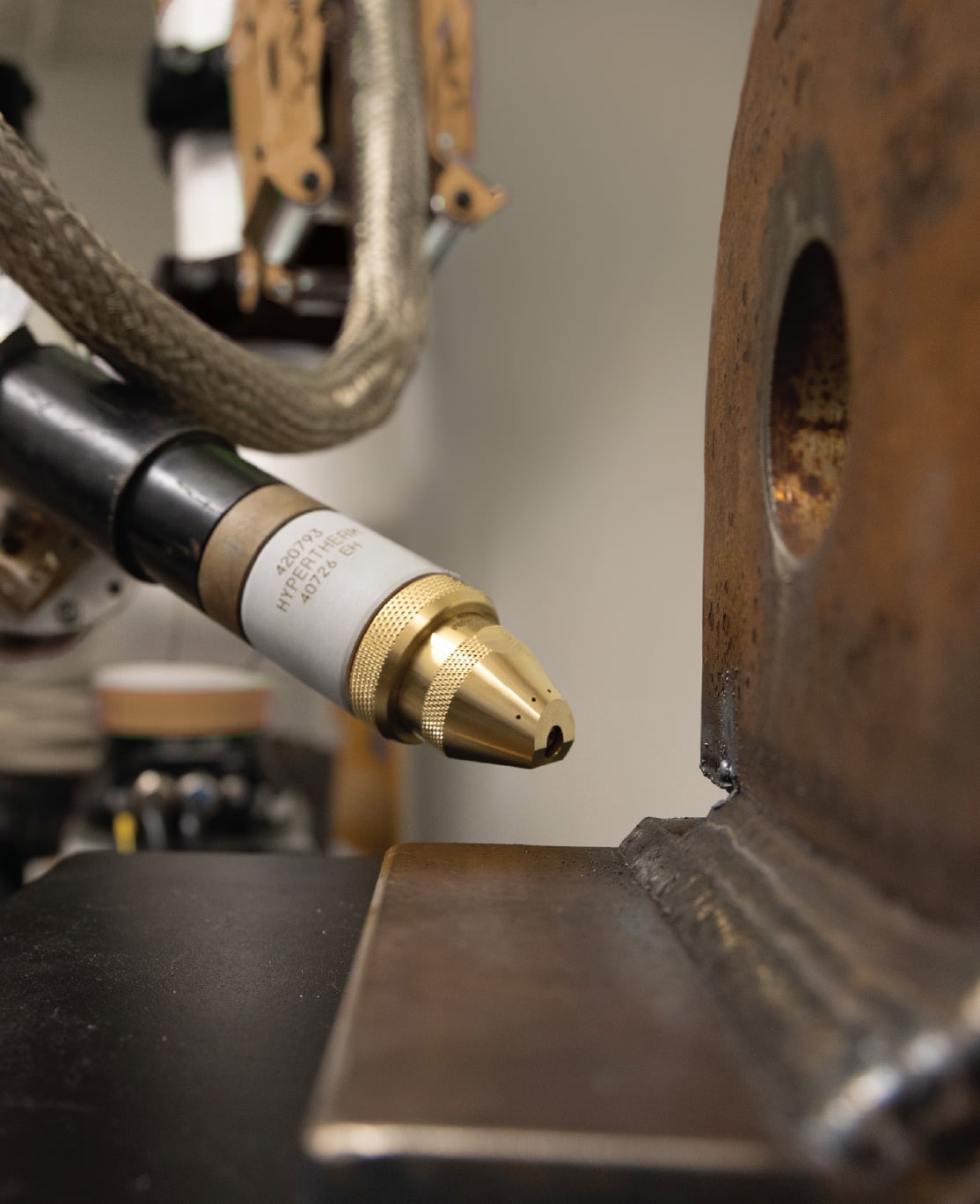

As fabrication grows more complex and global competition intensifies, shipbuilders face labor shortages and aging production methods. Leading shipyards are modernizing cutting, gouging, and beveling with advanced plasma cutting solutions—and increasingly exploring waterjet for new precision‑driven applications.
To stay competitive, shipyards are replacing outdated methods with advanced technologies, including advanced plasma and waterjet solutions that deliver higher precision, faster throughput, and lower operating costs across every stage of construction and repair.
Download our exclusive shipping guide and discover how to modernize cutting, gouging, and beveling for better weld prep.
Our technologies support every phase of fabrication and repair—delivering safer, higher quality cuts and gouges for more efficient welding, tighter fit ups, and more predictable performance.
Boost throughput with high‑accuracy beveling, robotic 3D cutting, and automated nesting workflows that reduce scrap and rework. Waterjet cutting is increasingly used for prototyping and specialty low-volume parts, offering new opportunities for cleaner, distortion-free edges.
Replace oxyfuel and carbon‑arc with high‑speed plasma cutting and gouging for cleaner surfaces, less distortion, and safer operation with less grinding.
Speed attachment removal and weld prep with FlushCut™ consumables and high‑amperage gouging that minimize grinding and protect base metal.
Perform fast, precise hull access cuts and weld removal with portable plasma systems that deliver clean openings and safer, more controlled repairs.
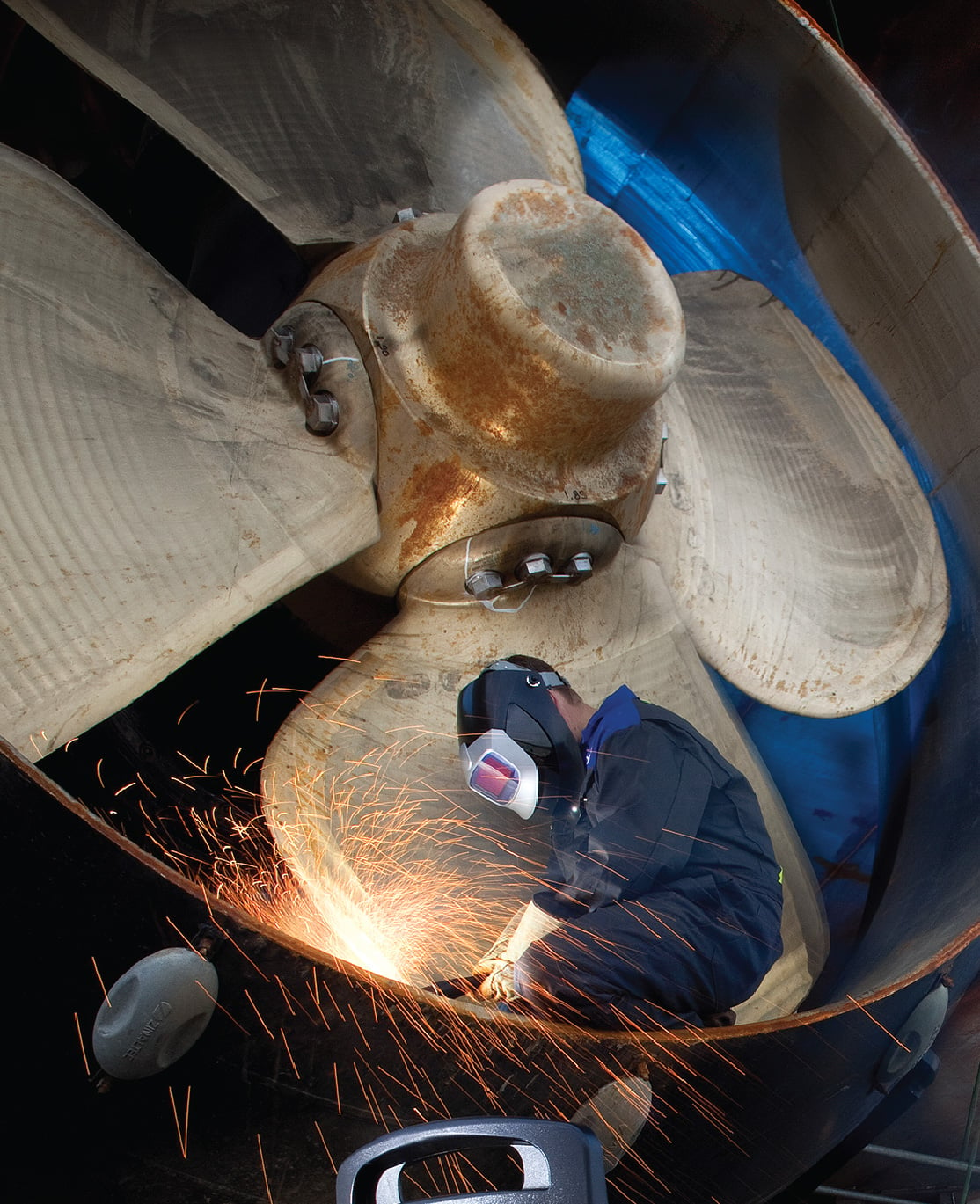
We deliver innovations that directly impact shipyard performance:
High‑amperage mixed‑gas gouging for fast, clean metal removal
Single‑piece cartridges deliver higher output and cut quality, while reducing cost
Proven cut settings across tables, pipe/tube machines, robots, and cobots
Arc‑bending FlushCut™ technology cuts lifting lugs up to 90% faster and reduces grinding time by up to 40% compared to oxyfuel
Lyman-Morse
The quality of the XPR300® cut is the very best that I’ve seen. It’s helping us to expand into other sectors such as agricultural, aeronautical, architectural, structural, and energy.”
Chungyong Ind. Co., LTD.
Shipbuilding
Nesting is easier and faster now, and we have become more productive.”
Gunderson Marine
Shipyard
One of the largest shipyards in the Northwestern U.S. modernizes its operations using plasma to cut flat plate and speed up robotic beam line cutting.
Plasma gouging – removing metal using a plasma arc – is similar to plasma cutting. A plasma arc between the torch and the workpiece melts the metal, and a gas jet blows away the molten material.
Extended-length torches for hand-held skeleton cutting and removal offer improvements to operator safety and ergonomics, as well as easier material handling and increased uptime.
FlushCut™ consumables for MAXPRO200® and Powermax® plasma cutting systems enable easy, fast, and clean removal of protrusions, welded attachments, bolts, and fixtures from metal surfaces without cutting into the base material.
Bevel cutting is cutting a part with an edge not perpendicular to the top of the piece. It is typically used to prepare plates or pipes for welding. Bevels can be cut at different angles and configurations, resulting in varying edge profiles.
For general hand-held cutting during fabrication, fit-up, and assembly, replacing oxyfuel torches with plasma systems offers quantifiable advantages in cut quality, speed of cut and set-up, as well as improving the safety of the yard.
Metal fabricators who want to increase productivity and product throughput choose cobot plasma cutting. This innovative solution provides rapid, consistent, and safe cutting and gouging outcomes while reducing secondary operations—all without a significant investment or lengthy learning curve.
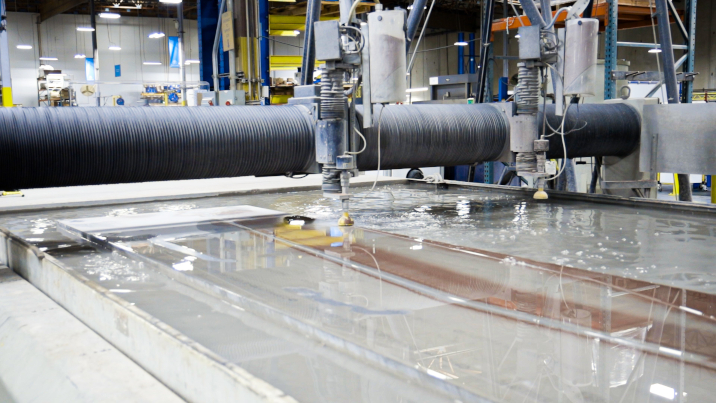
OMAX waterjets bring precise, heat‑free cutting to shipyards, eliminating distortion and reducing rework across metals, composites, and layered materials. Their cold‑cutting process keeps parts accurate from prototype to production, while intuitive operation and fast changeovers keep workflows moving.


